Jacksonville has the hardest water of the three metros we serve — and you don't have to take our word for it. JEA publishes hardness readings for all 41 of its ZIP codes, and labels 37 of them “very hard.”
Every figure below comes from JEA's own published reports. Nothing here is our estimate.
Hardness varies a lot inside Jacksonville. JEA's lowest-reading ZIPs (32065, 32234) come in at 120 mg/L / 7 gpg. The highest (32081) reads 372 mg/L / 22 gpg — more than three times as hard. Two houses fifteen minutes apart can genuinely need different answers, which is why we test at your tap rather than quoting from a map.
JEA states it plainly: “We receive 100 percent of that water from one of Florida's most treasured resources — the Floridan aquifer.” That aquifer is porous limestone, which is calcium carbonate. Groundwater sitting in it dissolves exactly the minerals that make water hard.
JEA's treatment does a lot of things well. It disinfects with chlorine, uses ozone at two plants to strip out the hydrogen sulfide that gives Northeast Florida well water its rotten-egg smell, and meets every federal health-based standard. What it doesn't do — because no utility is required to — is remove hardness.
So the water arriving at your house is safe and legal, and it is also carrying up to 372 milligrams of dissolved calcium and magnesium per liter. Those two facts are not in conflict. One is about health; the other is about your water heater.
The Environmental Working Group maintains a national tap water database that compares utility test results against its own health guidelines. For JEA, six contaminants exceed an EWG guideline out of 27 detected.
The largest exceedances in JEA's profile. These form when chlorine reacts with naturally occurring organic matter in the source water — a known trade-off of chlorine disinfection. JEA's levels are below the legal limits.
Both appear in the Floridan aquifer naturally and both were detected well below their federal legal limits — radium at 0.28 pCi/L against a limit of 5, arsenic at 0.03 ppb against a limit of 10.
The “forever chemicals” getting national attention are not among JEA's EWG exceedances. Worth knowing, because it's the first thing many homeowners ask about.
How to read those numbers honestly. EWG health guidelines are not legal standards — they are substantially stricter than federal limits, and EWG says so itself. Exceeding an EWG guideline is not a violation.
For the most recent quarter assessed by the EPA, JEA tap water was in compliance with federal health-based drinking water standards. If you want to reduce disinfection byproducts and chlorine taste at your tap, activated carbon is the tool for that — which is one of the three functions built into the Pro Plus.
Not sure whether you're in range? Put your ZIP in the form below and we'll tell you straight away — and we'll tell you what JEA reports for that ZIP while we're at it.
Readings above are a selection from JEA's published ZIP-code table. JEA notes the samples were taken between October and December; check the JEA page for the current table before relying on any single figure.
At 15 to 22 grains per gallon, Jacksonville is exactly the situation a three-function conditioner is built for — hardness high enough to damage appliances, plus free chlorine you can taste.
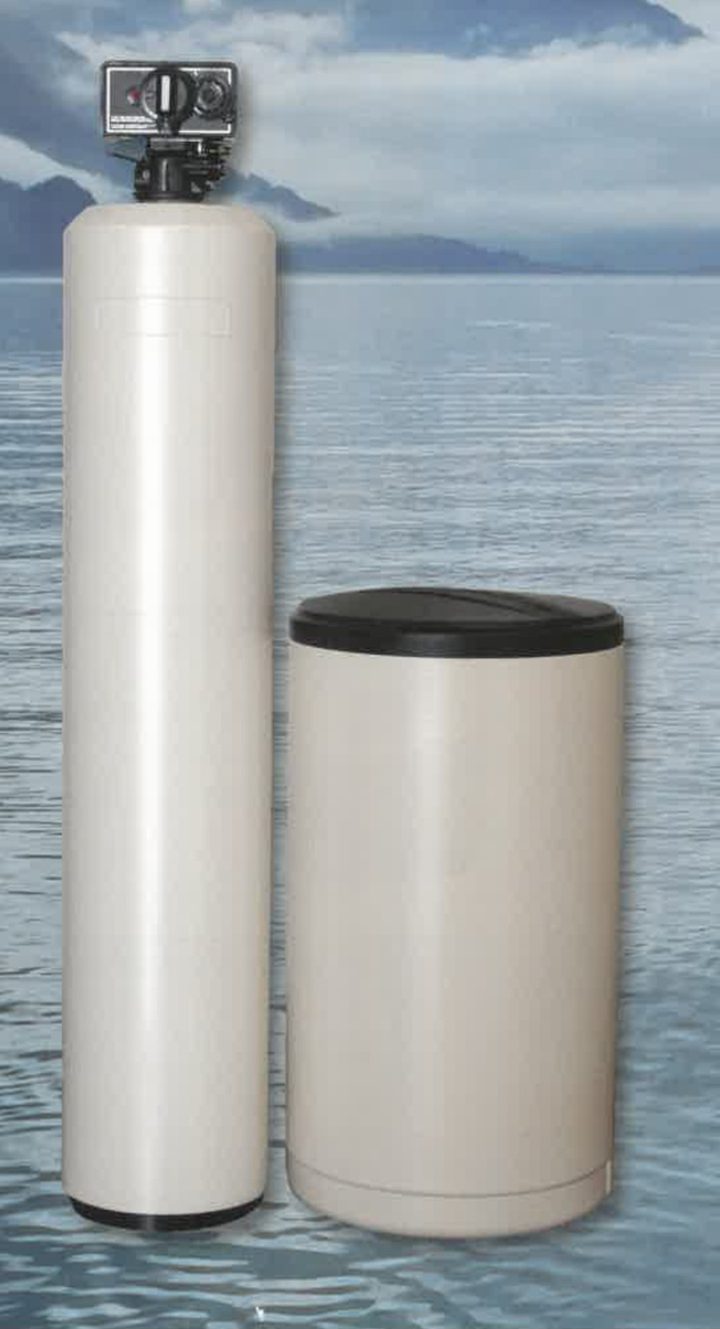
Softens out the calcium and magnesium, refines through activated carbon to take out the chlorine taste and odor, and filters through silica for clarity. 30,000 grain capacity with a Fleck 5600 metered valve, backed by a 5-year warranty.
Pro Plus detailsAn under-sink reverse osmosis unit for drinking and cooking water. Worth considering if disinfection byproducts are a concern for your household, or if you want to stop buying bottled water.
RO detailsA technician comes out, tests your water at the tap, and shows you the results on the spot. It takes about twenty minutes and costs nothing. If you don't want a system afterward, that's a perfectly fine outcome.