Every figure below comes from the City of Tampa's own 2024 Water Quality Report and fact sheets.
10.8grains per gallon
185 mg/L average total hardness in finished water, per the City of Tampa's 2024 Water Quality Report. That's just over the line into “very hard” — and it moves seasonally.
Very Hard — USGS scale, marginally
Tampa's hardness swings with the seasons. The city's own fact sheet puts the range at roughly 140 to 300 ppm (8 to 17 grains per gallon) — lower in the wet season, higher in the dry. So Tampa water crosses the hard / very-hard boundary in both directions over the course of a year. A single annual average understates what your appliances see in April and May.
Tampa water profile
UtilityTampa Water Department (Tippin facility)
People servedMore than 733,000
Source waterHillsborough River (surface water)
Average hardness185 mg/L (10.8 gpg)
Seasonal range140–300 ppm (8–17 gpg)
DisinfectantChloramine (ozone primary)
Federal complianceIn compliance, zero violations 2024
EWG guideline exceedances17 of 31 detected
Why Tampa is different
A river, not an aquifer
The City of Tampa's 2024 report is direct about it: “Tampa Water Department customers rely on the Hillsborough River as their primary source of water.” In 2024, just 2.5 percent of Tampa's drinking water was purchased from Tampa Bay Water, the regional wholesaler.
That regional wholesaler is where the more familiar Tampa Bay water story lives — Tampa Bay Water blends river water, thirteen regional wellfields and the Tampa Bay Seawater Desalination Plant to supply more than 2.6 million people across Hillsborough, Pasco and Pinellas. If you're in Pinellas or Pasco rather than the City of Tampa, your water likely comes through that system instead, and your numbers will differ.
The other thing that sets Tampa apart is the disinfectant. Tampa uses ozone as its primary disinfectant, then adds chlorine and ammonia to form chloramine, which holds up better through long distribution runs. Chloramine behaves differently from free chlorine — it's more persistent, it's harder to remove, and it's the reason Tampa tap water tastes different from Jacksonville's or Orlando's.
Beyond hardness
What else shows up in Tampa water
Thirty-one substances have been detected in City of Tampa water, and seventeen sit above a health guideline selected by the Environmental Working Group from a federal or state public health authority — the highest count of the three metros we serve, and the only one of the three where PFAS appears. Here is each one, what it was measured at, and what the guideline is protecting against.
What's in the water
In Tampa water
Health guideline
What the guideline protects against, and who set it
PFHxS PFAS — “forever chemical”
1.69 ppt
0.001 ppt 1,686× over
Immune system harm. One of the fluorinated compounds that do not break down in the environment or in the body. Guideline from an EPA toxicity assessment.4
PFOS PFAS — “forever chemical”
3.87 ppt
0.3 ppt 13× over
Cardiovascular harm and harm to a developing fetus. The most studied member of the family. Guideline from an EPA toxicity assessment.4
PFOA PFAS — “forever chemical”
1.29 ppt
0.09 ppt 14× over
Cancer, cardiovascular harm and fetal harm. Guideline from an EPA toxicity assessment.4
Haloacetic acids (HAA9) Disinfection byproduct
15.3 ppb
0.06 ppb 254× over
Cancer. Nine acids that form when disinfectant meets organic matter — and river water carries far more organic matter than aquifer water. One-in-a-million lifetime cancer risk level, peer-reviewed EWG study. No federal legal limit exists for this group.4
Haloacetic acids (HAA5) Disinfection byproduct
14.5 ppb
0.1 ppb 145× over
Cancer. The five federally regulated acids within that group. Same one-in-a-million basis.4
Total trihalomethanes Disinfection byproduct
14.5 ppb
0.15 ppb 97× over
Cancer. The four-chemical group formed the same way. One-in-a-million lifetime cancer risk level, peer-reviewed EWG study.4
Dichloroacetic acid Disinfection byproduct
7.71 ppb
0.2 ppb 39× over
Cancer and reproductive harm. One of the haloacetic acids above, measured on its own as well as in the group. Guideline from the California Office of Environmental Health Hazard Assessment.4
Chloroform Disinfection byproduct
6.66 ppb
0.4 ppb 17× over
Cancer and fetal harm. The most common of the four trihalomethanes. Guideline from the California Office of Environmental Health Hazard Assessment.4
Bromodichloromethane Disinfection byproduct
4.66 ppb
0.06 ppb 78× over
Cancer and fetal harm. Another of the four, formed when bromide is present in the source water. California Office of Environmental Health Hazard Assessment.4
Bromate Ozonation byproduct
2.54 ppb
0.1 ppb 25× over
Cancer. Forms when source water containing bromide is treated with ozone — which is how Tampa begins treatment. Guideline from the California Office of Environmental Health Hazard Assessment.4
Dibromochloromethane Disinfection byproduct
2.47 ppb
0.1 ppb 25× over
Cancer and fetal harm. The fourth of the trihalomethane group. California Office of Environmental Health Hazard Assessment.4
Dibromoacetic acid Disinfection byproduct
1.89 ppb
0.03 ppb 63× over
Cancer and fetal harm. Another of the individual haloacetic acids. California Office of Environmental Health Hazard Assessment.4
Trichloroacetic acid Disinfection byproduct
1.85 ppb
0.1 ppb 18× over
Cancer and reproductive harm. Also one of the five regulated acids. California Office of Environmental Health Hazard Assessment.4
Nitrate Runoff
0.347 ppm
0.14 ppm 2.5× over
Cancer, and oxygen deprivation in infants. Reaches surface water from fertilizer, manure and septic systems — and Tampa drinks surface water. Guideline from a peer-reviewed EWG study.4
Arsenic Naturally occurring
0.1 ppb
0.004 ppb 25× over
Cancer. Occurs naturally in Florida water. Guideline from the California Office of Environmental Health Hazard Assessment; the federal legal limit is far higher, and Tampa is well inside it.4
Chromium (hexavalent) Natural and industrial
0.0769 ppb
0.02 ppb 3.8× over
Cancer. Reaches water from mineral deposits and from industrial pollution. Guideline from the California Office of Environmental Health Hazard Assessment. No federal legal limit.4
Radium (226 + 228) Naturally occurring
0.30 pCi/L
0.05 pCi/L 6× over
Bone cancer and other cancers. A radioactive element that occurs naturally in Florida groundwater. Guideline from the California Office of Environmental Health Hazard Assessment.4
What a softener will and won't do here. A water softener does not remove PFAS or disinfection byproducts. It removes hardness. If contaminant reduction at the drinking tap is your priority, that's a reverse osmosis conversation, and we'll tell you so rather than selling you a softener for it.
Otter Soft Water is part of the UDI family — UDI Water, United Hydro and Otter Soft Water. Three names, one company, one job: clean water in Southeastern homes. The people installing your system, stocking your parts and answering your service call have been doing exactly this since 1979.
Tampa's hardness alone justifies a softener — and the dry-season peak near 17 grains per gallon is where the appliance damage actually happens.
Otter Pro Plus
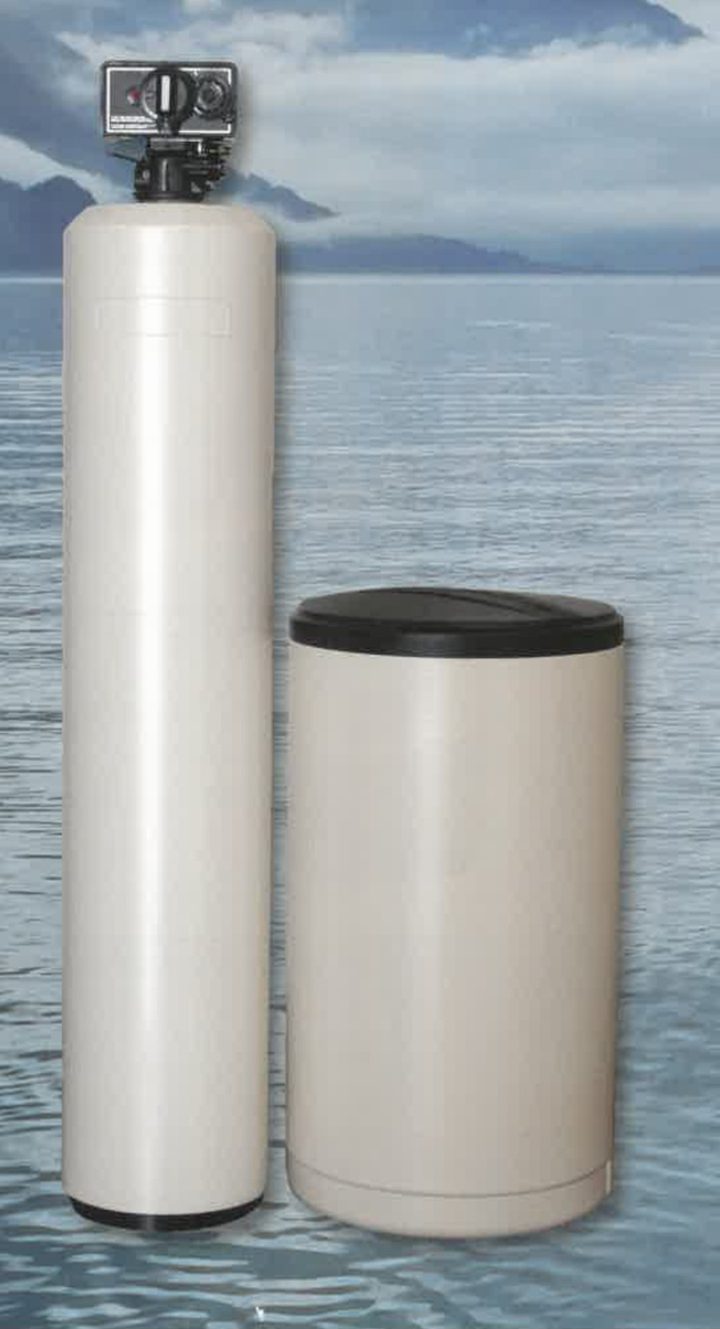
Mineral tank + brine tank
Primary
Otter Pro Plus
Handles the hardness across its full seasonal swing, and the activated carbon stage helps with taste and odor. 30,000 grain capacity, Fleck 5600 metered valve, 5-year warranty. The metered valve matters more here than elsewhere, because it adapts as hardness rises and falls through the year.
Given Tampa's contaminant profile, we'd point more Tampa customers toward adding reverse osmosis at the kitchen sink than we would in Jacksonville or Orlando. It's the right tool for what a softener can't touch — including the PFAS and the disinfection byproducts in the table above. Sold separately from the softener.
Water in this region varies more than in most metros, because different counties draw from different combinations of sources. Your ZIP tells us which utility you're on before we ever knock on the door.
Counties
HillsboroughTampa, Brandon, Riverview, Valrico, Lutz, Apollo Beach, Westchase
PascoWesley Chapel, Land O' Lakes, New Port Richey, Trinity
ManateeBradenton, Lakewood Ranch, Palmetto
Which utility are you on?
City of TampaHillsborough River 185 mg/L · 10.8 gpg
Tampa Bay Water (regional wholesaler)Rivers, 13 wellfields and seawater desal
County & city systemsVary — we check yours before we quote
Private wellUsually harder, often with iron and sulfur
If you're on Tampa Bay Water, a county or city system, or a private well, the 185 mg/L figure on this page doesn't describe your water. That's exactly why we test at your tap instead of quoting from a utility report.
Quick quote
Your quick quote in three easy steps.
Tell us who you are and when suits you. A local Otter technician calls to confirm, then brings your price in writing — before you spend $THOUSANDS more at the national brands.
Average hardness (185 mg/L / 10.8 gpg), population served, source water, chloramine treatment and zero-violation statement — City of Tampa 2024 Water Quality Report (published 2025).
Seasonal hardness range (140–300 ppm / 8–17 gpg) — City of Tampa, “Understanding Water Hardness” fact sheet, tampa.gov.
Regional supply, wellfields and seawater desalination — Tampa Bay Water.
Every figure in the table above — detected levels, health guidelines, the authority that set each guideline and the stated health effect — comes from the EWG Tap Water Database entry for the City of Tampa (PWS FL6290327), drawing on utility testing supplied to EWG by the Florida Department of Environmental Protection. EWG health guidelines are not legal standards and are substantially stricter than federal limits, and several of the substances listed have no federal legal limit of their own; the City of Tampa reports meeting every federal health-based standard.

 OtterSoft Water