Hard water isn't dangerous. It's expensive, and it's relentless. Here's what causes it in Florida, how to recognize it in your own house, and what the scale is actually costing you.
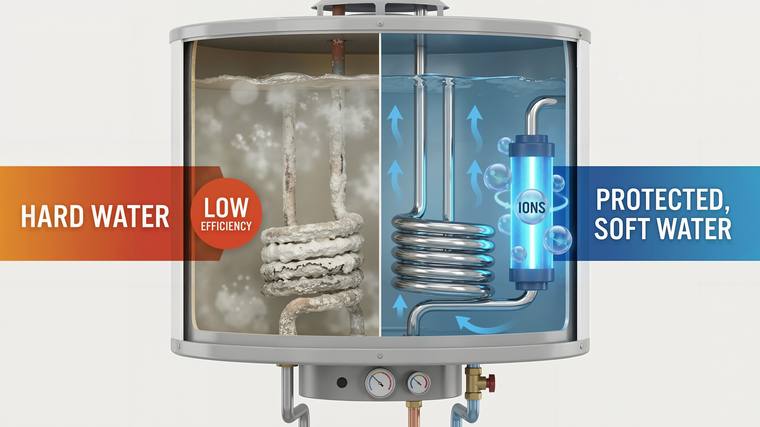
Hard water damage is invisible right up until something is cut open. These are the parts of the problem homeowners never see, because they happen inside pipes, tanks and appliances.
Photographs taken by our own technicians in the field.
Water hardness is a measure of how much dissolved calcium and magnesium your water is carrying. Rain that falls is naturally soft. It picks up hardness on the way down — seeping through soil and rock, dissolving minerals as it goes, and carrying them into the aquifer that your utility eventually pumps from.
The more mineral-rich the rock, the harder the water. And Florida is built on limestone, which is calcium carbonate. Water moving through it dissolves exactly the two minerals that define hardness.
Those minerals don't stay dissolved forever. Heat and evaporation drive them back out of solution, where they re-form as a hard crystalline deposit — scale. That's the chalk on your shower door, the crust inside your kettle, and the layer accumulating on the bottom of your water heater right now.
Hardness is not a health problem. Calcium and magnesium in drinking water are not harmful, and no U.S. regulator sets a health limit on hardness. Utilities don't remove it because they aren't required to. If a company tells you hard water is making you sick, be skeptical — the real case for softening is about your plumbing, your appliances, your laundry and your skin comfort, and that case is strong enough on its own.
The Floridan aquifer system underlies roughly 100,000 square miles beneath all of Florida and parts of Georgia, Alabama and South Carolina. It is one of the most productive aquifers in the world — and it is porous limestone. Groundwater drawn from it has spent a long time in contact with calcium carbonate.
That's why Jacksonville and Orlando — both drawing essentially 100% of their supply from the Floridan aquifer — deliver hard water even after full municipal treatment. Their plants are removing hydrogen sulfide, disinfecting, and meeting every federal standard. None of that touches hardness.
Tampa is the interesting exception. The City of Tampa draws most of its water from the Hillsborough River rather than the aquifer, and treats it with chloramine instead of free chlorine. It is still hard — 10.8 grains per gallon on average — but the hardness swings with the seasons, from around 8 gpg in the wet season up to about 17 in the dry.
Hardness is measured in grains per gallon (gpg) or milligrams per liter (mg/L, also written as ppm). One grain per gallon equals 17.1 mg/L. Here is the U.S. Geological Survey classification, with where our three metros land.
Note: the Water Quality Association uses a slightly different scale in grains per gallon that adds a “slightly hard” band. The two disagree at the boundaries, so any classification should name the scale it used. The figures above use the USGS classification.
You don't need a test kit to suspect it. You need a test kit to prove it — but the symptoms are consistent, and most Florida homeowners recognize several of these immediately.
Chalky deposits on faucets, shower heads and shower doors that return within days of being scrubbed off. This is scale — minerals coming back out of solution as the water evaporates.
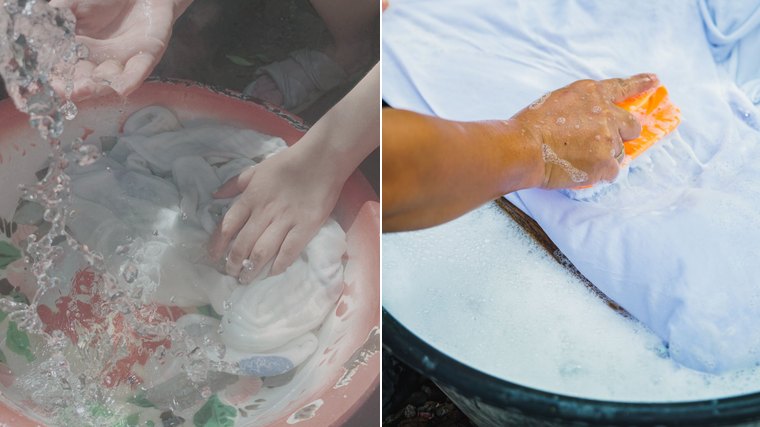
Calcium and magnesium react with soap instead of letting it foam. You use more shampoo and more detergent to get the same result, and you pay for the difference every month.
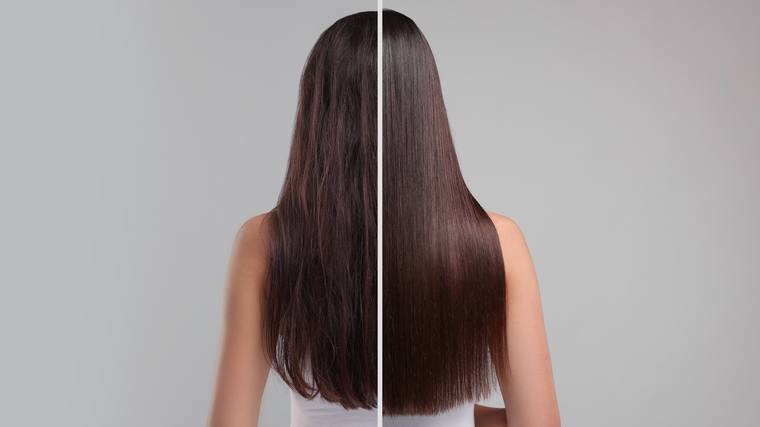
The slick feeling after a shower isn't leftover soap. It's soap curd — soap chemically bonded to hardness minerals — and it's the same thing that leaves a ring in the tub.
That mineral residue stays behind on skin and hair after every rinse. Many people find soft water noticeably more comfortable, particularly anyone with eczema-prone skin.
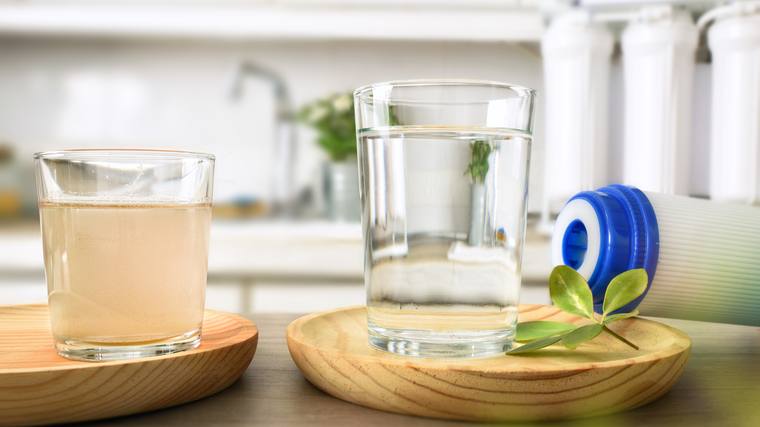
Dishes come out of the dishwasher with a white haze no rinse aid quite fixes. The spots are dried mineral deposits left as the water evaporates off the glass.
Minerals trap detergent in the fibers. Towels get scratchy, whites go grey, darks fade, and clothes wear out faster than they should.
Scale narrows the inside of pipes and clogs aerators and shower heads. Pressure drops so gradually that most people never connect it to their water.
Orange-brown stains in sinks, tubs and toilets usually mean iron alongside the hardness — common on private wells in Florida and not unusual on municipal supply either.
Hardness itself is mostly tasteless, but the chlorine or chloramine used to disinfect your water is not. If your tap tastes like a pool, that's a separate problem — and a carbon filter is the fix.
This is the part homeowners underestimate. In 2009 the Water Quality Research Foundation commissioned Battelle Memorial Institute to run a controlled study on 30 water heaters, comparing hard water against softened water under an accelerated-scaling protocol. The findings below are measured results from that study.
Tankless gas heaters fared worse than storage tanks. On hard water they needed deliming at the equivalent of just 1.6 years of service, with efficiency falling from 80% to 72%. The units running softened water held their rated efficiency.
One honest caveat: the same study found no measurable difference in electricity consumption for electric storage water heaters, because their heating elements stay submerged. The researchers expected shorter element life on hard water but did not measure it. If you have an electric tank, the energy argument is weaker — the plumbing, fixture, laundry and comfort arguments still apply.
A number you'll see elsewhere that we won't use. Plenty of water-treatment sites claim hard water costs water heaters “up to 48% of their efficiency.” That figure is a misreading of this same study — 48.4% was a life-cycle cost savings for tankless heaters at 25 gpg, including avoided service calls, not an efficiency loss. The study's highest modeled efficiency loss is 25.5%. We'd rather give you the real number.
Most water treatment companies will quote you a big number here. We'd rather show our work. Below is a line-by-line estimate for a typical Florida home at 10 grains per gallon — roughly Tampa's average — built only from figures we can point to a source for.
Two honest caveats. First, the detergent and water-heater research was funded by the Water Quality Association — the water treatment industry's own trade group. It's the best controlled data that exists on this question, and it is not disinterested. The studies also date from 2009–2011, and the foundation has said it is repeating them because soap formulations have changed since.
Second, this estimate is deliberately conservative and it is lower than what you'll see quoted elsewhere in our industry. If the honest number were enough on its own to justify a system, we'd lead with it. For most Florida households the stronger case is the part you can't put a price on — how the water feels, how the laundry comes out, and not scrubbing scale off the shower door every week.
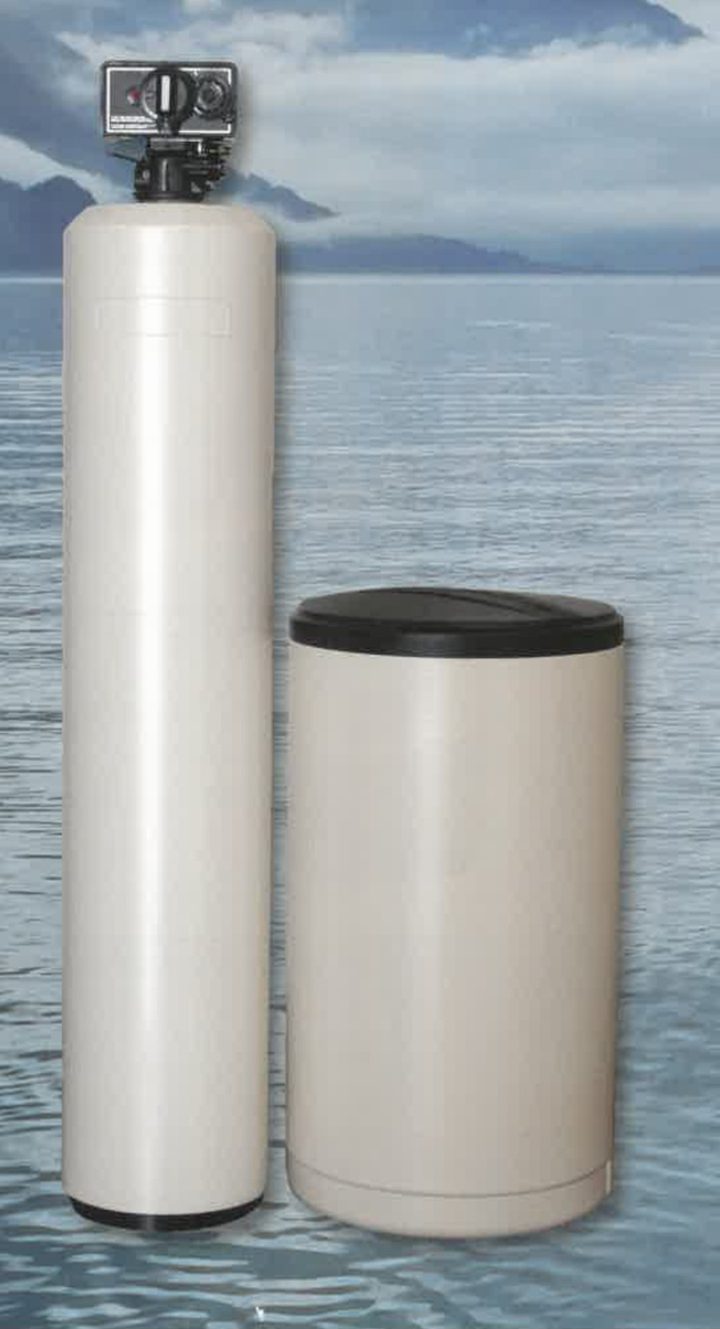
A softener works by trading places. Water passes through a bed of resin beads charged with sodium ions. The calcium and magnesium in the water have a stronger attraction to the resin than sodium does, so they stick to the beads and release sodium in their place. What comes out the other side is soft.
When the resin fills up with hardness minerals, the system regenerates: it flushes the bed with a concentrated brine solution from the salt tank, which strips the calcium and magnesium off and recharges the beads for the next cycle.
A metered valve does this based on how much water you've actually used rather than on a fixed timer, which means less salt and less water down the drain.
See how the Pro Plus does itA technician comes out, tests your water at the tap, and shows you the results on the spot. It takes about twenty minutes and costs nothing. If you don't want a system afterward, that's a perfectly fine outcome.
Both things are true. Jacksonville, Tampa and Orlando were all in compliance with federal health-based drinking water standards in the most recent quarter assessed by the EPA. Compliance is about safety. Hardness isn't regulated as a safety issue, so a utility can deliver perfectly legal water that still scales your water heater.
Template-assisted crystallization and similar salt-free systems change how minerals crystallize so they're less likely to stick to surfaces. They don't remove hardness — the minerals are still in the water. That distinction drives everything below.
Where a salt-based softener does more for you:
Soap and detergent. This is the big one. It's the calcium and magnesium reacting with soap that stops it lathering and leaves curd on your skin, your tub and your laundry. A conditioner leaves those minerals in the water, so none of that changes. Only actual removal fixes it — and in controlled testing, softened water cut the detergent needed for equal cleaning by up to half in laundry and up to 70% in dishwashing.
How your water feels. The slick, no-film shower and the softer laundry that people associate with soft water come from removing hardness. A conditioner won't deliver that, and homeowners who expected it are usually the ones who end up disappointed.
Spotting on glass and fixtures. Minerals still in the water still dry on surfaces. You may see less hard scale bonded to the inside of pipes, but the spots on shower doors and glassware largely remain.
It's a measurable result. A softener's output can be tested at your tap — hardness in, hardness out, in grains per gallon. Salt-free conditioning changes crystal behavior rather than water chemistry, so there's no equivalent before-and-after number to hand you. Ion-exchange softeners are also covered by a certification standard, NSF/ANSI 44, that salt-free devices fall entirely outside of.
Iron. Softener resin removes a moderate amount of dissolved iron along with the hardness. Salt-free systems generally don't.
Where salt-free genuinely wins: no salt to buy or haul, no drain line, no regeneration water down the sewer, no sodium added, and no electricity in some designs. If you're in a condo with no floor drain, on a septic system you'd rather not send brine to, on a sodium-restricted diet, or your only goal is protecting a tankless heater from scale, it's a legitimate choice — and we'll say so.
You can. Hardware-store strips will get you in the right range. We'll do a more complete test at your tap for free, including hardness, chlorine and total dissolved solids, and explain the results while we're there. There's no charge and no obligation.
The cost figures on this page are an estimate, not a quote or a guarantee of savings. Your actual costs depend on your water hardness, household size, appliances and utility rates. We show the inputs so you can check the arithmetic yourself.