Locally owned & operated — Jacksonville · Tampa Bay · Orlando Free in-home water test · (904) 897-2493
Home  ›  Locations  ›  Orlando
Central Florida

Water softeners in Orlando

Orlando has the mildest water of the three metros we serve. We'll say that plainly rather than pretend otherwise — and then we'll tell you why 7 grains per gallon is still seven times harder than water that qualifies as soft.

Your water at a glance

What OUC delivers to your tap

Figures below come from the Orlando Utilities Commission's own published information and its 2025 Water Quality Report.

7grains per gallon
129 ppm average hardness, in OUC's own words. Milder than Tampa and considerably milder than Jacksonville — but still firmly in the range where scale forms and soap stops lathering.
Hard — USGS scale

For context: water is only classified as soft below 1 grain per gallon. Orlando's 129 ppm sits inside the USGS “hard” band (121–180 mg/L). It's the difference between a nuisance and a crisis — not the difference between a problem and no problem. If you've noticed spots on glassware or crust on your shower head, that's what 7 gpg looks like.

Orlando water profile

UtilityOrlando Utilities
Commission (OUC)
Source water100% Lower Floridan
aquifer, ~¼ mile deep
Water plants7, across a
200 sq-mi service area
Average hardness129 ppm
(7 gpg, per OUC)
DisinfectantChlorine — no chloramine
(ozone first)
FluorideDiscontinued July 2025
(Florida SB 700)
Federal complianceIn compliance,
zero violations
EWG guideline exceedances7 of 16 detected
Where it comes from

A quarter mile straight down

OUC draws 100% of its water from the Lower Floridan aquifer, roughly a quarter mile below Orlando. Like Jacksonville, that means limestone — and limestone means dissolved calcium and magnesium.

Orlando comes out softer than Jacksonville despite drawing from the same aquifer system, because aquifer chemistry varies by depth and location. The Lower Floridan under Central Florida simply hands OUC a milder starting point than the wells serving Duval County.

Two other things distinguish Orlando's water. OUC uses ozone first for taste, odor and hydrogen sulfide removal, then chlorine — and it explicitly does not use chloramine, unlike Tampa. And as of July 1, 2025, OUC stopped adding fluoride in response to Florida SB 700; only naturally occurring fluoride remains.

Beyond hardness

What else shows up in Orlando water

In the Environmental Working Group's database, seven substances exceed an EWG health guideline out of sixteen detected in OUC water — the fewest total detections of our three metros.

Largest exceedances

Disinfection byproducts

Haloacetic acids and trihalomethanes lead OUC's EWG profile, as they do in Jacksonville. Both were measured below their federal legal limits — TTHMs at 53.4 ppb against a limit of 80.

Naturally occurring

Radium

Detected at 0.84 pCi/L against a federal limit of 5 pCi/L. Radium occurs naturally in the Floridan aquifer; it shows up in Jacksonville's profile too, at a lower level.

Not an issue here

PFAS

OUC's 2025 report states it found no detectable quantities of any of the 29 PFAS substances in federal monitoring rounds in October 2024 and April 2025.

How to read those numbers honestly. EWG health guidelines are not legal standards — they are stricter than federal limits by design, and exceeding one is not a violation. OUC reported zero MCL violations in its 2025 water quality report and was in compliance with federal health-based standards in the most recent EPA-assessed quarter. OUC has publicly disputed EWG's framing, noting that EWG's standards differ from both EPA and FDEP requirements.

We're showing you both because you'll find both if you go looking, and we'd rather you hear the caveat from us.

Where we work

Central Florida communities we serve

OUC serves the City of Orlando and portions of Orange County. Much of Greater Orlando is on other utilities entirely — or on a private well — and those readings can be very different from OUC's.

Counties

OrangeOrlando, Winter Park, Lake Nona, Windermere, Winter Garden, Apopka, Ocoee
SeminoleAltamonte Springs, Sanford, Oviedo, Lake Mary, Longwood
OsceolaKissimmee, St. Cloud, Celebration
LakeClermont, Minneola, Groveland

A note on utilities out here

OUCCity of Orlando and
parts of Orange County
Other municipal systemsWinter Park, Apopka, Sanford,
Kissimmee and others run their own
Toho Water AuthorityMuch of Osceola County
Private wellsCommon in outlying Lake and
Seminole — usually harder

If you're outside OUC's territory, the 129 ppm figure on this page doesn't describe your water. That's exactly why we test at your tap instead of quoting from a utility report.

The fix

What we'd put in an Orlando house

At 7 grains per gallon on OUC water, a softener is a comfort-and-longevity purchase rather than an emergency. On a Central Florida well, it's often a different conversation entirely.

Primary

Otter Pro Plus

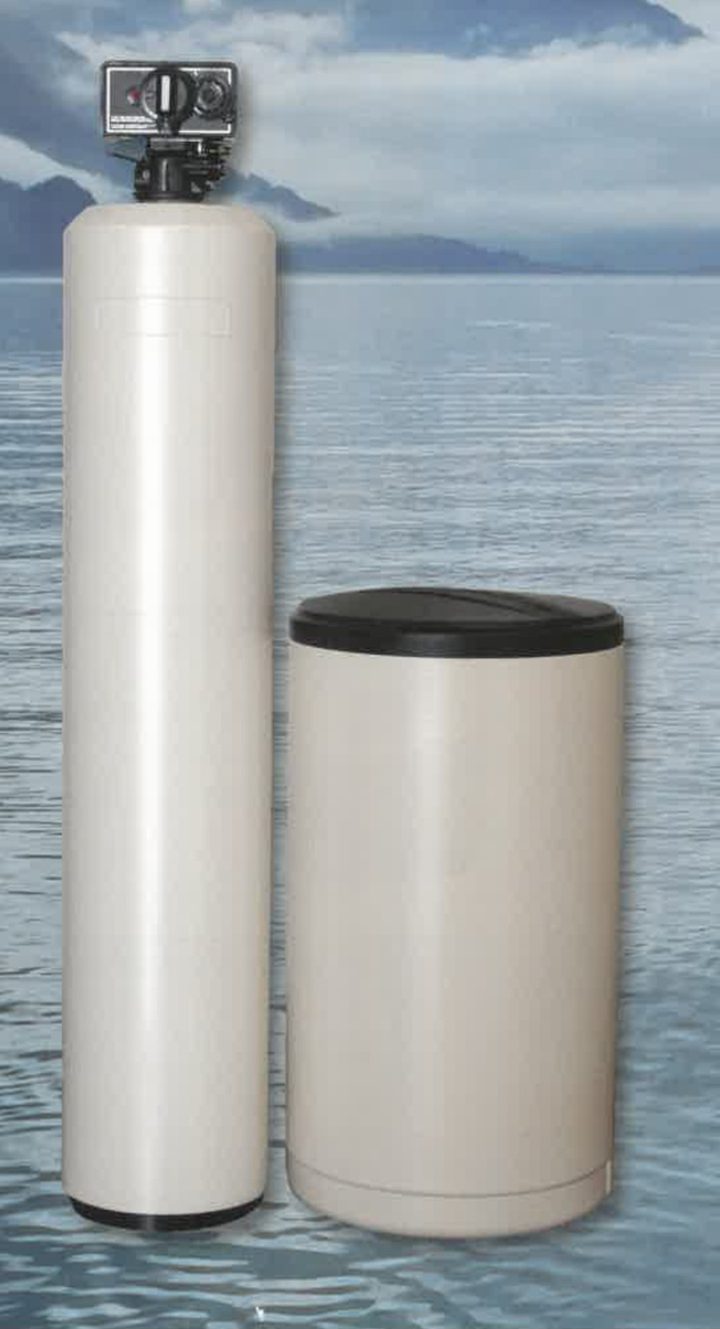
At Orlando's hardness, a 30,000-grain system regenerates less often than it would in Jacksonville — which means less salt and lower running cost. The activated carbon stage is arguably the bigger win here, since OUC uses free chlorine you can taste.

Pro Plus details

Optional

RO drinking water

Under-sink reverse osmosis for drinking and cooking. Worth a look if disinfection byproducts concern you, or if your household has been buying bottled water out of habit.

RO details
Free water test

Find out what's really in your water

A technician comes out, tests your water at the tap, and shows you the results on the spot. It takes about twenty minutes and costs nothing. If you don't want a system afterward, that's a perfectly fine outcome.

No cost, no obligation Same-week appointments Evening & Saturday slots

Find out what's really in your water

Book your free in-home water test. Takes under a minute; we'll confirm by text.

We can still help — but we'll need your landlord. A softener connects to the home's main water line, so the property owner has to authorize the installation. Send us your details anyway and we'll give you what you need to make the case, or talk to them directly if you'd rather we did.

We'll only use your details to arrange your water test. We don't sell your information. [Consent language is a draft — have counsel review before public launch.]

Sources for figures on this page

  1. Average hardness (129 ppm / 7 gpg), chlorine vs. chloramine, and the fluoride change — Orlando Utilities Commission, Water Services. OUC does not attach a sampling year to the hardness figure; verify before publication. Note also that 129 mg/L converts to about 7.5 gpg at the standard 17.1 factor — OUC rounds to 7.
  2. Source water (100% Lower Floridan aquifer), plant count, chlorine levels and zero-violation statement — OUC 2025 Water Quality Report. Note: hardness does not appear anywhere in this report; the FAQ above is OUC's only published hardness figure.
  3. Contaminant detections, EWG health-guideline exceedances and the federal compliance statement — EWG Tap Water Database, OUC (PWS FL3480962). EWG health guidelines are not legal standards and are stricter than federal limits.
  4. Hardness classification bands — U.S. Geological Survey.
Call Free Water Test