The short answer: White crust and spots are usually hardness. Orange or brown stains usually mean iron. A rotten-egg smell points to hydrogen sulfide, and a pool-like taste comes from chlorine or chloramine. A water test is the best way to know for sure.
What Could Be Causing It?
| What you notice | Most likely cause | What it means |
|---|---|---|
| White crust, spots on glass and fixtures | Hardness (calcium and magnesium) | A water softener removes it |
| Orange, brown or rust-colored stains | Iron | A softener can remove moderate amounts; a test shows how much is there |
| Black or dark brown stains | Manganese | A test can confirm it |
| Blue-green stains | Acidic water pulling copper from pipes | A test can check your pH |
| Rotten-egg or sulfur smell | Hydrogen sulfide, common in wells | A test can help pinpoint the source |
| Pool or bleach taste and smell | Chlorine or chloramine from your utility | Drinking water filtration can reduce it |
| Metallic taste | Iron, manganese or copper | A test can identify it |
| Cloudy, yellow or brown water | Sediment, iron or tannins | A test can identify it |
Common Stains and What They Mean
What if I'm seeing white spots and crust?
If you're constantly cleaning white spots off your shower doors, faucets and glassware, hard water is the most likely cause. When water evaporates, calcium and magnesium are left behind as scale.
What if I'm seeing orange or brown stains?
Orange, yellow or brown stains around sinks, toilets and tubs usually point to iron in the water. Iron is a common concern for private well owners in Florida, and it can show up on city water as well. Depending on the amount, iron can stain fixtures and laundry and affect the taste of your water.
What if I'm seeing blue-green stains?
Blue-green stains on sinks and tubs can be a sign of acidic water. When the pH is low, water can pull copper from your plumbing.
Common Smells and Tastes
What if my water smells like rotten eggs?
A rotten-egg or sulfur smell usually points to hydrogen sulfide. It's especially common in well water, and it can also come from bacteria in water heaters or drains.
What if my water tastes like a pool?
Most city water systems use chlorine or chloramine to disinfect water and keep it safe to drink. It's an important part of treatment, but many people don't like the taste. A drinking water system like the Otter Ultra-6 can reduce it at your kitchen sink.
What if my water tastes metallic?
A metallic taste may be a sign of iron, manganese or copper in your water. Some of these can come from your pipes.
What if my water looks cloudy or discolored?
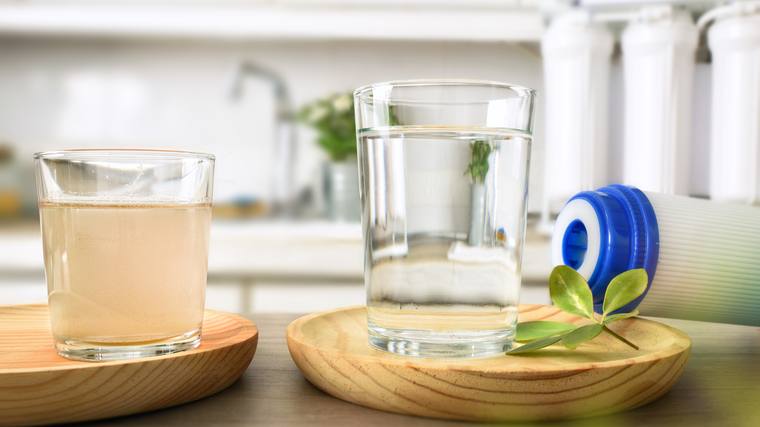
Water that looks cloudy, yellow or brown shouldn't be ignored. It can be caused by sediment, iron, tannins from decaying vegetation or plumbing conditions. A water test can help identify what's going on.
Why Test Before You Treat?
Different water problems need different solutions. A water softener is the right fix for hardness, but it isn't the answer for every stain, smell or taste. That's why we test your water first. If a softener won't fix what you're seeing, we'll tell you.
Find Out What's in Your Water
You don't have to guess what's causing the spots on your shower door, the stains in your sink or the smell from your faucet. Otter offers a free, no-obligation in-home water test for both city water and well water.